
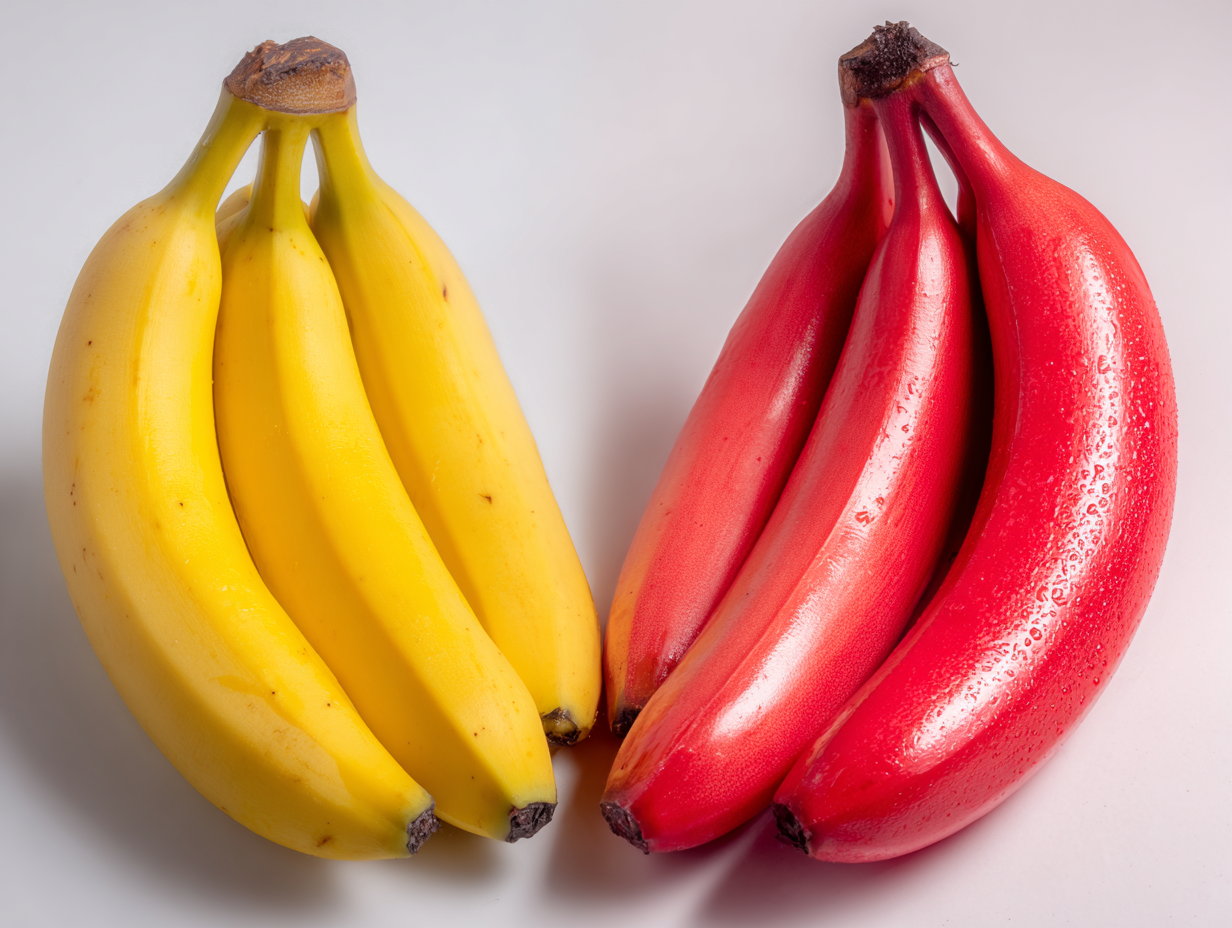
Red banana vs yellow banana guide
Bananas are one of those foods that sit in every kitchen, but carry more nutrition than most people realise. But not all bananas are the same. The familiar yellow banana shares space with its deeper, richer cousin, the red banana. Both look similar, but they differ in taste, nutrients, and how they affect the body.
So, which one truly deserves a place in a daily diet? The answer is not as simple as picking a winner. It depends on what the body needs, and how the fruit is eaten.
What makes red bananas different?
Red bananas are smaller, thicker, and have a reddish-purple peel. Inside, the flesh is creamy and slightly pinkish. The taste carries a hint of berry-like sweetness, which makes them feel almost like a dessert fruit.
Nutritionally, red bananas stand out for their higher levels of antioxidants. These compounds help reduce cell damage in the body. They are also rich in vitamin C and beta-carotene, which the body converts into vitamin A, important for skin and eye health.
A report by the International Journal of Molecular highlights that pigmented fruits like red bananas tend to have higher antioxidant activity due to natural compounds called carotenoids.
The everyday power of yellow bananas
Yellow bananas are the most commonly eaten variety. Their mild sweetness and soft texture make them easy to include in any meal.
They are especially known for their potassium content, which supports heart health and helps maintain blood pressure. According to The Nutrition Source by Harvard bananas are one of the most accessible natural sources of potassium and vitamin B6.
They also contain resistant starch, especially when slightly raw. This type of starch feeds good gut bacteria and helps digestion. As the banana ripens, this starch converts into natural sugars, making it easier to digest and quicker to provide energy.
Which one is healthier?
It is tempting to label one as “better,” but both serve different roles.
Red bananas may have an edge when it comes to antioxidants and immune support. Their richer nutrient profile can be helpful for people looking to improve skin health or reduce oxidative stress.
Yellow bananas, on the other hand, are excellent for quick energy, digestion, and heart health. Athletes and fitness enthusiasts often prefer them before or after workouts because they are easy to digest and restore energy quickly.
So, the better choice depends on the moment: red bananas for nourishment and recovery, yellow bananas for energy and routine use.
How to eat them for maximum benefit
Timing and pairing matter more than people think.
Eating bananas in the morning, especially with a source of protein like nuts or yoghurt, helps balance blood sugar levels. Eating them alone may cause a quick spike and drop in energy for some people.
Slightly unripe yellow bananas are better for gut health due to higher resistant starch. Fully ripe bananas, whether red or yellow, are easier on the stomach and good for quick energy.
Red bananas are best eaten when fully ripe, when the peel turns darker and softer. That is when their antioxidants are most available to the body.
Who should choose what?
For someone dealing with fatigue or needing quick energy during the day, yellow bananas are a practical choice. They are light, filling, and easy to carry.
For those focusing on immunity, skin health, or adding variety to their diet, red bananas can offer extra benefits.
People with diabetes should be mindful of portion size and ripeness, as both types contain natural sugars. Pairing bananas with fibre or protein can help manage blood sugar response.
Children, elderly individuals, and those recovering from illness can benefit from both, depending on tolerance and preference.
So, which one should we consume?
There is no clear winner in the red banana versus yellow banana debate. Both bring something valuable to the table.
The real benefit comes from variety. Including both types, when available, can help cover a wider range of nutrients without making the diet complicated.
Bananas, in any form, remain one of the simplest ways to nourish the body, quietly, consistently, and without fuss.