
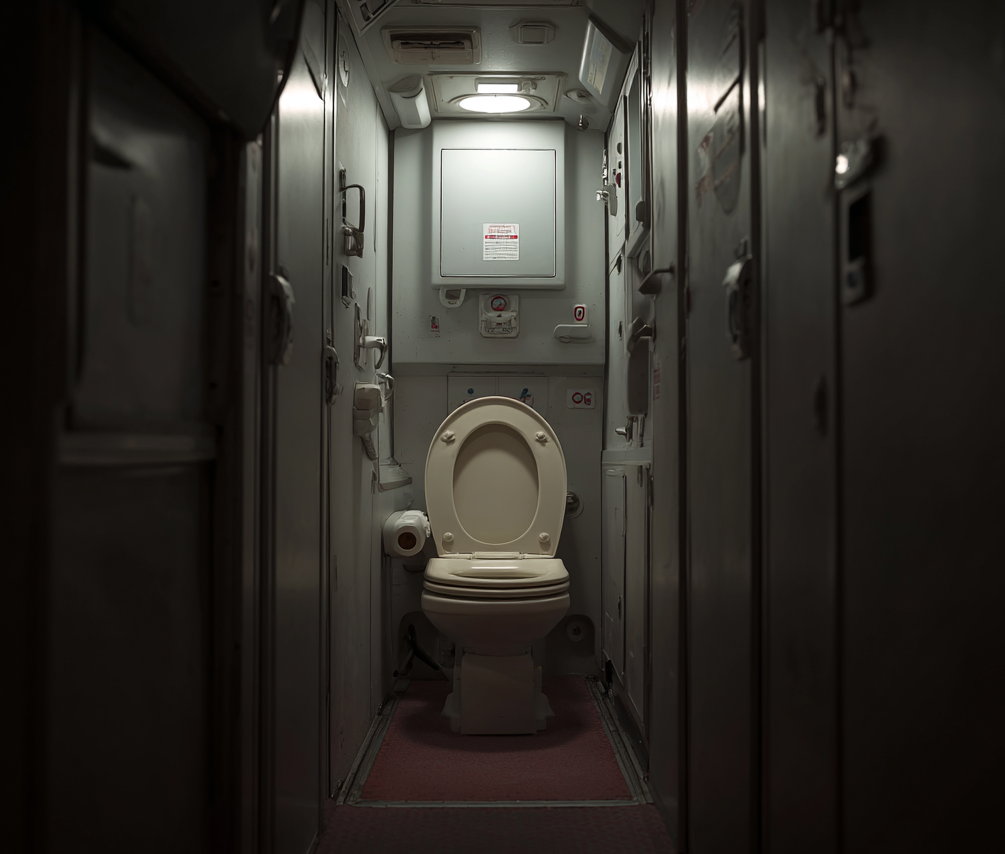
The moment you press flush on a plane, a surprisingly powerful system springs into action – one that works very differently from what you are used to on the ground.
You are cruising at 35,000 feet, squeezing into a compact airplane lavatory, and you press that slightly intimidating flush button. Instead of the quiet swirl you expect, there is a sudden, thunderous whoosh that feels powerful enough to vacuum the room. It is one of the most startling moments on a flight, and it often leaves passengers momentarily frozen, wondering what exactly just happened below. The simple answer is this: airplane toilets do not work like the ones you use on the ground. They rely on a specially designed vacuum system built for flying at high altitude.
Here’s What Happens When You Flush A Toilet In An Airplane
It Is Not Gravity, It Is Suction
Unlike toilets on the ground, airplanes cannot rely on gravity to move waste through pipes. At cruising altitude, the cabin is pressurised and the water supply is limited. So instead, aircraft use a vacuum flush system. When you press the flush button, a valve at the bottom of the bowl opens briefly, and a strong pressure difference instantly pulls everything out. That loud “whoosh” you hear is air rushing rapidly into the system, carrying waste away in seconds.
This is why airplane toilets use very little water compared to household toilets. The process is fast, efficient, and designed to function safely in mid‑air.
Where Does Everything Go?
No, it is not released into the sky. That is one of the most persistent flying myths. All waste travels through sealed pipes into a holding tank located on the aircraft, usually near the rear. These tanks are specifically built to store waste securely for the entire flight duration. The blue liquid you sometimes notice is a disinfectant and deodoriser. It helps control odour and begins breaking down waste once it reaches the tank.
What Happens After Landing
After the plane lands, trained ground crew connect the aircraft to a specialised service vehicle. This vehicle safely empties the waste tank and disposes of its contents following strict sanitation rules at the airport. It is a standard process and takes place after nearly every commercial flight.
So the next time you hear that startling whoosh mid‑flight, you’ll know it’s simply smart engineering doing its job efficiently in the air.