
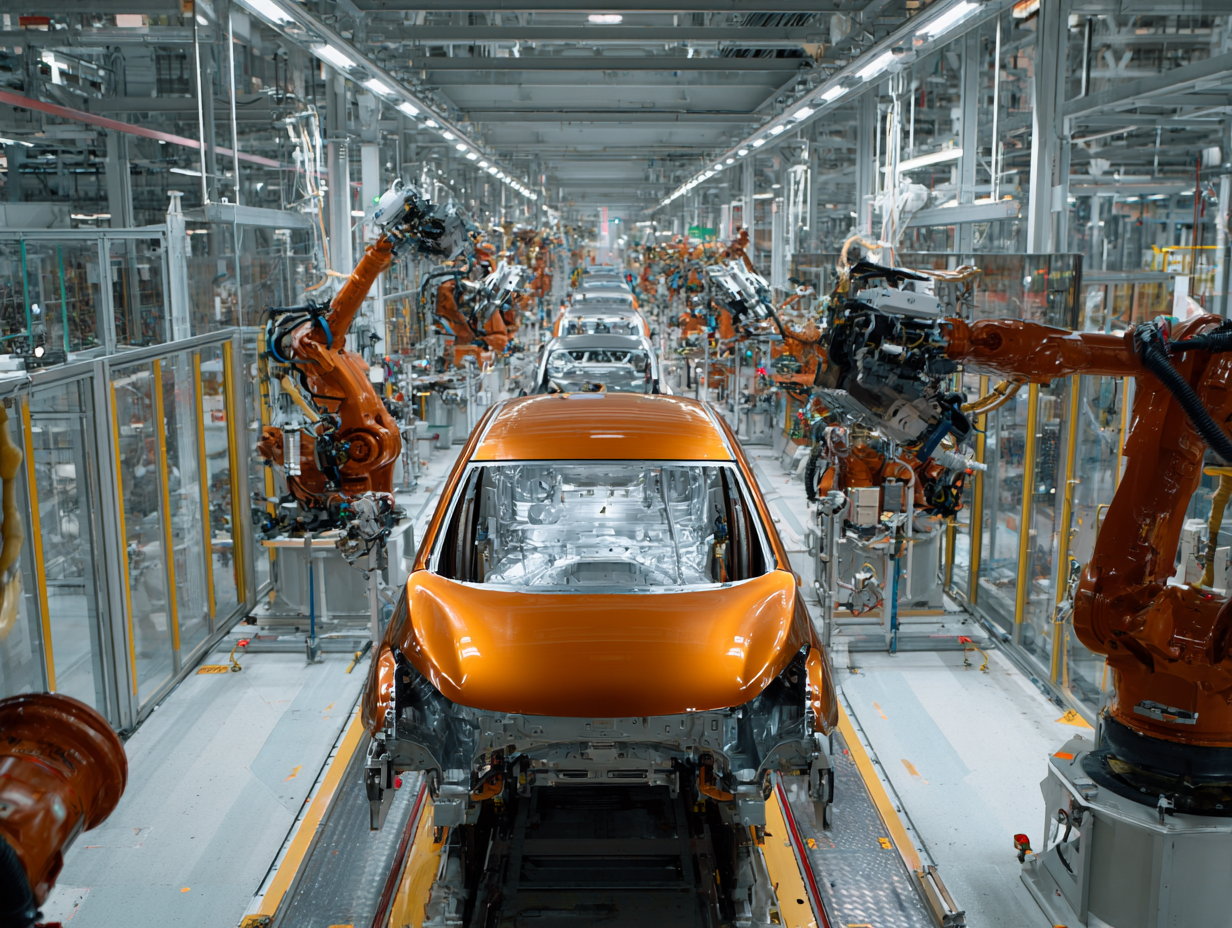
For decades, the automotive industry perfected a model built on global integration. Components crossed borders multiple times before reaching final assembly plants, suppliers expanded where costs and expertise aligned, and manufacturers optimized production networks on a continental or global scale. The result was an industry capable of delivering vehicles efficiently while supporting supply chains spanning North America, Europe and Asia.
A growing emphasis on tariffs and trade barriers is forcing automotive manufacturers to reconsider long-established sourcing and production strategies. Supporters argue that tariffs can strengthen domestic industry and encourage local investment. Critics counter that isolating the US from global trade networks risks increasing costs, reducing competitiveness and introducing uncertainty into an industry already managing electrification, software development and changing consumer demand.
Automotive supply chains were built for globalization, not isolation
Modern vehicle production relies on one of the most complex supply chains in the world. A single vehicle can contain thousands of components sourced from hundreds of suppliers across multiple countries. Engines, transmissions, semiconductors, battery materials and electronic systems often cross national borders several times before final assembly.
This interconnected model evolved because it delivered efficiency. Manufacturers could locate production where expertise, infrastructure and costs aligned most effectively. Suppliers could specialize, achieve scale and serve multiple markets from strategically located facilities.
When duties are applied to imported components or finished vehicles, costs can accumulate throughout the production cycle. Unlike many industries, automotive manufacturing often involves repeated border crossings for individual parts, meaning tariff-related expenses can multiply before a vehicle reaches a customer.
The challenge is particularly visible in North America, where the automotive ecosystem has been deeply integrated for decades. Production facilities in the US, Canada and Mexico frequently operate as a single manufacturing network rather than independent national systems.
As trade barriers increase, manufacturers must decide whether to absorb higher costs, pass them on to consumers or redesign their supply chains entirely.
Research from Atradius suggests that global motor vehicle and parts production could decline by 1.7% in 2025 and 2.1% in 2026 as tariff pressures and related disruptions weigh on the sector. Industry analysts also warn that higher production costs can affect vehicle affordability and demand.
Manufacturers are shifting from efficiency toward resilience
For many automotive executives, the response has been a strategic shift away from pure efficiency. Over the past several years, manufacturers have increasingly focused on resilience, flexibility and risk management. Geopolitical tensions, pandemic-related disruptions and trade disputes have exposed vulnerabilities that were previously considered manageable within highly optimized global networks.
Tariffs have accelerated this reassessment. Automakers and suppliers are investing more heavily in scenario planning, regional sourcing strategies and supply chain visibility tools. Some are evaluating alternative production locations. Others are expanding inventories or diversifying supplier bases to reduce exposure to individual markets.
KPMG research indicates that nearly three-quarters of automotive executives are prioritizing risk-reduction initiatives as trade uncertainty becomes a permanent feature of the operating environment.
Building redundancy into supply chains often means sacrificing some of the efficiencies that helped drive profitability during the globalization era. Manufacturers may need to support additional suppliers, establish duplicate production capabilities or maintain larger inventories than previously required.
Investment decisions are also becoming more complicated. Automotive projects typically require long planning horizons, with factories and supplier facilities expected to operate for decades. Frequent shifts in trade policy make it harder for executives to determine where future production should be located and how capital should be allocated.
The next phase of industrial strategy could reshape global production
The broader question facing the automotive industry is whether current trade policies represent a temporary adjustment or the beginning of a more permanent restructuring of global manufacturing.
Some policymakers view tariffs as a mechanism to encourage domestic production and reduce dependence on overseas suppliers. In certain sectors, particularly those tied to strategic technologies, governments are increasingly willing to accept higher costs in exchange for greater supply chain security.
The automotive industry is already responding. Manufacturers continue to announce investments in battery production, semiconductor capacity and vehicle assembly facilities closer to end markets. Many executives view these moves less as a return to national manufacturing and more as a shift toward regionalization.
Rather than building entirely domestic supply chains, companies are creating regional networks designed to balance resilience with efficiency. North America, Europe and Asia are emerging as more self-contained manufacturing ecosystems, even as global trade remains important.
The upcoming review of the USMCA agreement will be closely watched across the industry. Changes to regional content requirements, tariff structures or trade provisions could influence investment decisions for years to come.